
- All
- Product Name
- Product Keyword
- Product Model
- Product Summary
- Product Description
- Multi Field Search

Views: 0 Author: Site Editor Publish Time: 2026-05-27 Origin: Site


Designing compact hydraulic systems requires maximizing torque density without expanding the machine footprint. Space is often your most limited resource on the factory floor. Engineers face intense pressure to deliver more mechanical power within much tighter physical envelopes. You must navigate these rigid structural limitations while ensuring consistent, reliable mechanical performance. Acknowledging this stage of the decision process is critical. Engineers and procurement teams must evaluate beyond base specifications to account for integration constraints, operational longevity, and supply chain reliability. Selecting the wrong component based solely on upfront price often leads to catastrophic system downtime later. We created this guide to provide an objective, evidence-based framework for specifying, evaluating, and maintaining the CY1 series rotary actuator in demanding industrial environments. You will discover practical strategies for configuring output shafts and mitigating dynamic side loads. We also explain how to streamline your maintenance protocols and accurately source viable replacements to keep production moving.
Torque-to-Footprint Ratio: Helical spline designs provide high-torque output in restricted envelopes by eliminating external linkages.
Specification Variables: Exacting requirements for output shafts, rotation angles, and end caps are critical to prevent premature mechanical binding.
Risk Mitigation: Proper handling of side loads and end-cushioning dictates the functional lifespan of the unit.
Lifecycle Economics: Total Cost of Ownership (TCO) relies heavily on fluid compatibility, predictable MTBF (Mean Time Between Failures), and drop-in replacement availability.
Engineers consistently look for spatial efficiency in modern equipment design. The internal helical mechanism provides a massive advantage here. It directly converts linear piston movement into rotational force. This clever internal geometry eliminates the need for bulky external linkages. You can pack an incredible amount of rotational power into a very small area. When we compare this to standard rack-and-pinion alternatives, the spatial savings become obvious. Rack-and-pinion units require elongated housings to accommodate the gear rack travel. Vane designs often struggle to produce sufficient low-speed torque. The helical actuator overcomes both limitations. It delivers immediate, high-torque output right from a standstill. This makes it an ideal solution for restricted envelopes.
Operational environments are rarely clean. Dust, moisture, and chemical contaminants threaten exposed mechanical parts daily. This is where sealed environment integrity becomes a crucial benefit. The CY1 series operates inside a constant internal oil bath. All moving gears remain entirely enclosed. This self-lubricating design creates superior contamination resistance. You also eliminate dangerous external pinch points. Safety improves drastically on the factory floor. Industrial machines last much longer when critical drive components stay protected from ambient debris.
We must also define realistic performance thresholds. Torque generation at low speeds dictates your payload manipulation capabilities. You cannot simply look at peak pressure ratings. You must evaluate how the device handles heavy, static loads at startup. Setting realistic expectations prevents system overload. Understand the practical boundaries of your chosen unit. If your payload requires a slow, controlled rotation, verify the low-speed torque curves. Do not assume maximum torque is available across the entire speed range.
Matching your hardware to your application requires precise sizing. Operating pressure directly dictates your dynamic movement capabilities. There is an exact correlation between system pressure limitations and load capacity. You must calculate accurate safety margins. Never operate continuously at the absolute maximum pressure rating. We recommend sizing your unit so normal operations only require 70 to 80 percent of its peak capacity. This buffer handles unexpected load spikes. It prevents sudden seal blowouts during aggressive operation.
You have several physical configuration options to consider. Customizing the hardware ensures proper integration. Standardizing around specific application needs simplifies future maintenance.
Rotation Angles: Select standardized limits such as 45°, 90°, 180°, or 270°. Custom angles are possible but complicate spare parts inventory.
Output Shaft Interfaces: Evaluate the structural integrity of your connection. Single ends work for simple levers. Double ends allow dual-load driving. Keyless setups reduce stress concentrations. Woodruff keys offer simple alignment. Flat shaft designs work best for setscrew clamping.
Mounting Protocols: Your chassis design dictates the mount. Flange mounts on the rod or cap end provide rigid support. Angle brackets suit lateral installations. Extended tie-rods offer flexible, through-hole bolting.
Material selection determines environmental survival. You must assess housing and component materials against environmental corrosiveness. Below is a simple matrix to guide your compact rotary actuator material choices.
Material Type | Primary Use Case | Corrosion Resistance |
|---|---|---|
Carbon Steel | Standard indoor manufacturing facilities. | Low to Moderate. Requires protective coatings. |
300-Series Stainless | Food processing and pharmaceutical areas. | High. Excellent against moisture and weak acids. |
400-Series Stainless | High-stress applications needing hardness. | Moderate. Stronger than 300-series but less rust-proof. |
Anodized Aluminum | Weight-sensitive robotics or aerospace chassis. | High. Good surface protection, though less impact resistant. |
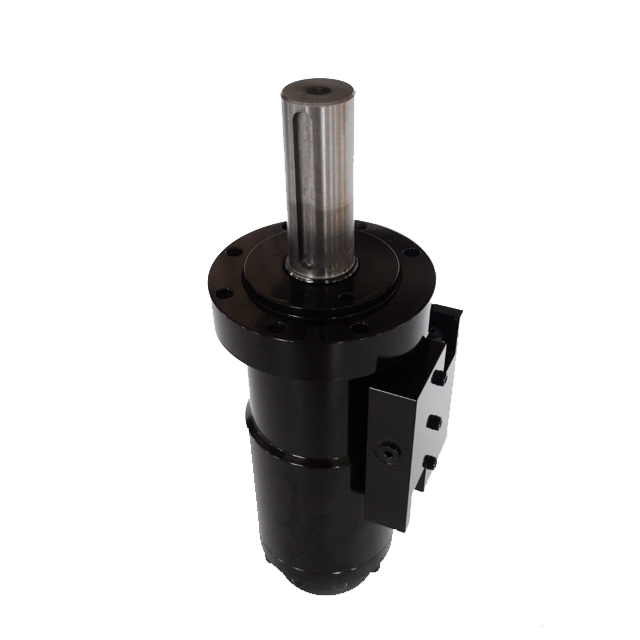
Dynamic side loads destroy equipment faster than almost any other variable. They represent a primary failure point in virtually any compact setup. You must proactively manage them. Off-axis forces push the internal piston out of alignment. This causes severe friction, seal degradation, and eventual seizing. You must know when external load-bearing structures are mandatory. Heavy cantilevered loads require external thrust bearings to absorb the physical stress. Sometimes internal multi-point contact bearings are sufficient. The CY1 series rotary actuator often features robust internal bearing support. However, pushing beyond rated radial limits guarantees a catastrophic mechanical failure.
End-cushioning is equally necessary. High-inertia stops generate immense kinetic energy. Imagine a heavy robotic arm swinging 180 degrees. If it hits a hard mechanical stop at full speed, the shockwave shatters metal. Hydraulic braking mechanisms prevent these end-position collisions. Built-in cushioning gradually restricts fluid flow near the end of the stroke. This decelerates the mass smoothly. You avoid catastrophic housing fractures. Proper cushioning ensures your system operates quietly and survives years of cyclic loading.
Thermal and fluid realities heavily influence mechanical behavior. Standard operating temperature bands typically range from -20°C to +60°C (-4°F to +240°F). Extreme heat thins hydraulic fluid. This decreases viscosity and lowers volumetric efficiency. Internal leakage increases as the fluid becomes watery. Conversely, extreme cold thickens the fluid. The pump struggles to push viscous oil through narrow passages. Sluggish response times inevitably follow. Always match your fluid viscosity grade to your ambient operating environment. Doing so stabilizes your torque output regardless of external weather changes.
Engineers must shift their evaluation logic away from basic unit prices. You must assess the broader operational lifecycle. Initial procurement costs represent just a fraction of the actual expense. You should prioritize energy consumption metrics. Evaluate the wear-part replacement cycles carefully. Look at expected MTBF data to forecast planned downtime. A slightly more expensive unit often saves thousands of dollars in maintenance labor over five years. Cheaper components frequently require constant rebuilding, driving up your factory floor labor expenses.
Supply chain bottlenecks remain a constant threat to production schedules. The drop-in replacement strategy is your best defense against extended OEM lead times. Legacy systems occasionally break down unexpectedly. If the original manufacturer quotes a twenty-week lead time, your production line halts. You must identify exact drop-in replacements for your aging equipment. A reliable hydraulic rotary actuator that matches existing bolt patterns and port locations is invaluable. It allows maintenance teams to swap broken units in minutes. You completely bypass lengthy retrofitting processes.
Vendor evaluation criteria also demand rigorous scrutiny. Do not accept vague performance claims from distributors. Demand verifiable MTBF data based on real-world testing. Verify their rapid spare parts availability. You need to know they stock critical seal kits locally. Transparent warranty conditions are non-negotiable. Ensure they cover premature wear under normal operating parameters. A strong vendor acts as a technical partner, offering configuration drawings and fluid compatibility guidance before you finalize a purchase order.
Proactive care prevents sudden system breakdowns. You need a structured routine inspection framework. Relying on run-to-failure methods is a dangerous gamble. Establishing a baseline schedule for verifying running parameters extends component life significantly. We recommend the following tiered approach:
Daily Visual Checks: Look for external oil weeping around the output shaft. Listen for unusual grinding noises during operation. Verify system pressure gauges read within normal limits.
Weekly Lubrication: Apply grease to external moving linkages. Clean dust buildup off the main housing to prevent thermal trapping.
Quarterly Deep Audits: Perform mechanical and electrical checks. Inspect proximity sensors for secure mounting. Test fluid samples for particulate contamination or water ingress.
Diagnosing low torque output frustrates many technicians. They immediately assume internal mechanical failure. This is often incorrect. Guide your users through pressure verification first. Check the main pump output. Ensure inline filters are not clogged. Perform overload checks next. A binding external mechanism frequently causes the perceived loss of torque. If the load exceeds maximum capacity, the actuator simply stalls. Rule out these external factors before unbolting the unit from the machine.
Seal swelling and internal leaks present serious dangers. They usually stem from fluid incompatibility. Using the wrong synthetic oil degrades standard nitrile seals rapidly. They swell, soften, and tear under pressure. You must conduct internal bypass tests to confirm this. Apply pressure to one port and leave the other open. If fluid pours out the open port continuously, internal bypass is occurring. You must rebuild the industrial actuator using appropriate replacement seals. Flushing the entire hydraulic circuit prevents the new seals from suffering the same fate.
Preventing gear damage requires understanding load dynamics. Twisted or chipped gear teeth rarely result from normal wear. They stem from severe shock loading. A sudden emergency stop or a jammed payload sends a massive force spike back into the helical gears. Mechanical binding also shears teeth. Ensure your external guides and rails remain perfectly parallel. Below is a quick diagnostic chart to help you troubleshoot common visual symptoms.
Symptom observed | Likely Root Cause | Immediate Action Required |
|---|---|---|
Slow, erratic rotation | Air trapped in hydraulic lines. | Bleed system lines at highest elevation point. |
Excessive heat buildup | Fluid viscosity too high or internal friction. | Verify fluid grade. Check for external load binding. |
Loud knocking at end of stroke | End-cushioning failure or maladjustment. | Adjust cushion needle valve. Inspect internal bumpers. |
Continuous internal bypass | Seal deterioration from wrong fluid type. | Flush system. Rebuild unit with compatible seals. |
Selecting the optimal component requires balancing mechanical capability against spatial limitations. You must logically cross-reference your required torque and footprint with dynamic load protections. Never ignore the necessity of robust cushioning and adequate bearing support. These internal protections determine whether your equipment runs for a decade or breaks within months.
Take action by compiling your exact operational parameters today. Document your specific dimensional constraints, operational mediums, and expected cycle rates. Gather this data before engaging any vendors. Armed with this information, you can request precise configuration drawings or a formal RFQ. Proactive specification guarantees a seamless integration process.
A: Lower torque usually stems from pressure drops in your system. Check your main pump for wear and inspect inline filters for clogs. Internal seal degradation also causes fluid bypass, reducing the force applied to the piston. Always verify external loads are not exceeding intended capacity.
A: Yes. Over-threaded port fittings present a severe risk. If the threaded fitting protrudes too deeply into the housing bore, it physically obstructs the moving piston. This collision causes immediate scoring on the piston face and ruins internal seals. Always use correctly sized fittings.
A: Base your choice on timeline and performance matrix requirements. If you have a broken machine halting production, a standardized drop-in replacement is mandatory to restore operations quickly. Choose customization only during initial prototyping or when standard units cannot survive unique environmental demands.
A: Thrust face corrosion usually results from moisture ingress. Poor fluid maintenance allows water condensation to accumulate inside the oil reservoir. This water settles on internal metal surfaces during downtime, causing rust. You prevent this through regular fluid flushing and using water-absorbing filters.


