
- All
- Product Name
- Product Keyword
- Product Model
- Product Summary
- Product Description
- Multi Field Search

Views: 0 Author: Site Editor Publish Time: 2026-01-21 Origin: Site


How do compact rotary actuators drive the future of robotics and automation? These powerful components are essential for precision and efficiency in modern systems. In this article, we'll explore how these actuators enable high-performance solutions in space-constrained environments, transforming industries across the globe.
A rotary actuator is a mechanical device designed to rotate an object through the application of force. These actuators are essential for a variety of tasks that require rotational motion, such as opening and closing valves, adjusting the angle of a robotic arm, or positioning objects in assembly lines. Rotary actuators can be powered by different sources, including hydraulic, pneumatic, or electric power, depending on the requirements of the specific application.
The key components of a rotary actuator include the housing, a motor or power source, and an output shaft. The motor or power source generates force, which is transmitted to the shaft, causing it to rotate. This rotational motion is then used to control other mechanical systems, making rotary actuators indispensable in robotics and automation systems.
While rotary actuators come in various sizes and configurations, compact versions are designed to perform the same tasks as their larger counterparts while occupying less space. Compact rotary actuators are typically used in applications where size constraints are a concern, such as small robots or tightly packed automation systems. These actuators provide the same level of precision, torque, and efficiency as traditional rotary actuators but are designed with a smaller, more efficient form factor.
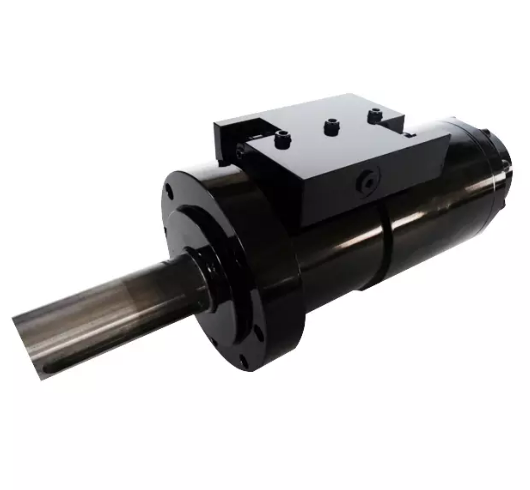
Compact rotary actuators are designed to fit into applications where traditional actuators might be too large or cumbersome. The main difference between compact and traditional rotary actuators lies in their size, but that doesn't mean compact actuators sacrifice performance. On the contrary, they are engineered to deliver high torque and precise motion in a much smaller and more efficient package. This enables them to be used in smaller systems where every inch of space is valuable.
For instance, Chiyu's CY2 Series Rotary Actuator is a great example of a compact actuator that provides the same performance as larger models but is designed to fit into smaller robotic systems and automated equipment. These actuators offer the same torque, speed, and reliability but with a significantly smaller footprint, making them ideal for applications in robotic arms, AGVs, and cobots.
Another benefit of compact rotary actuators is their energy efficiency. Smaller actuators often require less power to operate, which contributes to a more efficient system overall. By reducing energy consumption, compact rotary actuators help businesses lower their operational costs while improving system performance.
Robotic arms are integral to modern automation, handling tasks such as assembly, welding, material handling, and packaging. The use of compact rotary actuators in these robotic systems enables precise joint and elbow movements, which are critical for performing delicate tasks. Whether it’s placing parts on an assembly line or carrying out complex welding operations, these actuators ensure that the robotic arms move smoothly and with high precision, even in confined spaces.
Compact rotary actuators like the CY4 Series from Chiyu Hydraulic Equipment Co., Ltd. are commonly integrated into robotic arms due to their ability to provide high torque and precise control in a small form factor. In automotive manufacturing, for example, robotic arms with compact rotary actuators are used to assemble parts with great accuracy. The ability to control the movement of the robotic arm precisely is essential for reducing errors and improving product quality.
Automated guided vehicles (AGVs) are used in warehouses and manufacturing facilities to transport materials from one point to another. These vehicles require highly efficient steering mechanisms to navigate their environments, and compact rotary actuators are a perfect fit for this task. Their small size allows AGVs to maneuver through tight spaces while maintaining high performance and stability.
By using compact rotary actuators such as the CY1 Series, AGVs can navigate more freely, increasing the efficiency of the overall operation. These actuators provide the precise control needed to move the vehicle smoothly and accurately, enhancing both the performance and maneuverability of AGVs in dynamic and ever-changing environments.
Collaborative robots, or cobots, are designed to work alongside human operators to increase efficiency and reduce the risk of injury from repetitive tasks. Compact rotary actuators are critical in ensuring that cobots can move precisely and safely in environments where humans are present. These actuators allow cobots to handle tasks such as material handling, picking, and packaging while ensuring that their movements are smooth and controlled.
The CY5 Series Tilt Quick Coupler is an example of a compact rotary actuator that enhances the agility of cobots. Its compact design allows cobots to perform complex tasks with high precision while maintaining safety and efficiency. By enabling the cobots to operate seamlessly in close proximity to human workers, these actuators contribute to creating safer and more productive work environments.
In precision engineering and manufacturing, every movement counts. Compact rotary actuators are often used in systems that require high levels of precision and repeatability, such as CNC machines, 3D printers, and automated assembly lines. The high accuracy and reliability of these actuators make them invaluable in industries where product quality is paramount.
For example, in CNC machining, compact rotary actuators are used to adjust the positioning of tools and workpieces with millimeter precision. The small form factor of these actuators ensures that they can fit into compact CNC systems, allowing manufacturers to reduce the overall size of their machines without sacrificing performance.
Material handling and sorting systems are crucial in industries such as logistics, pharmaceuticals, and food processing. Compact rotary actuators help control the movement of materials along conveyors, sorting bins, and pick-and-place systems, improving efficiency and reducing human intervention. The ability to move large volumes of goods quickly and accurately is key to optimizing these systems.
The CY6 Series Rotary Actuator from Chiyu is a great example of an actuator used in material handling applications. Its high torque and compact design make it ideal for sorting systems where space is limited. By incorporating these actuators into material handling systems, businesses can improve operational efficiency, reduce labor costs, and ensure smoother operations.
The primary advantage of compact rotary actuators is their small size. By taking up less space, these actuators can be integrated into robotic systems and automation equipment where space is at a premium. This is particularly important in mobile robots and applications where the actuator needs to fit within a small footprint without compromising on performance.
The ability to use smaller actuators in tight spaces allows for more flexible and modular designs. Systems can be reconfigured quickly to adapt to changing needs, without worrying about fitting large actuators into the design. This flexibility helps companies respond to market demands faster and more efficiently.
Compact Rotary Actuator Series | Torque (Nm) | Size (mm) | Applications |
50-200 | 75-150 | AGVs, Robotic Arms | |
100-400 | 100-200 | Industrial Robots, Cobots | |
200-600 | 150-250 | Automated Sorting, CNC | |
150-500 | 120-200 | Material Handling, Packaging |
Despite their compact size, these actuators offer high torque and excellent performance. The ability to provide strong rotational force in a small package makes them ideal for demanding applications where space is limited but performance is essential. Additionally, compact rotary actuators are designed to be energy-efficient, using less power to achieve the same performance as larger actuators.
In manufacturing settings, where energy efficiency is critical to controlling operational costs, compact rotary actuators like the CY4 Series can significantly reduce energy consumption without sacrificing performance. This results in lower operational costs and a more sustainable production process.
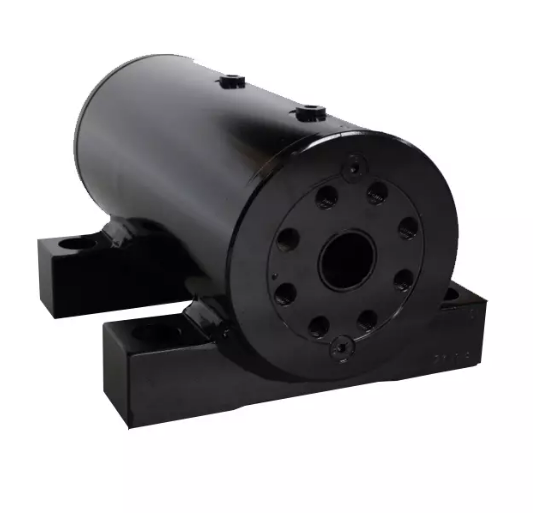
While compact rotary actuators offer significant space-saving advantages, they do have limitations when it comes to torque output. The smaller the actuator, the lower the amount of torque it can typically produce. This can pose a challenge for applications that require high torque to operate effectively.
However, manufacturers like Chiyu address this challenge by using advanced materials and innovative designs to increase the torque output of compact actuators. The CY6 Series, for example, offers high torque relative to its size, making it suitable for a wide range of industrial applications.
Series | Torque (Nm) | Size (mm) | Ideal Application |
CY1 | 50-200 | 75-150 | Low-Torque, Precision Tasks |
CY2 | 100-400 | 100-200 | Medium-Torque, Industrial |
CY4 | 200-600 | 150-250 | High-Torque, Automation |
CY6 | 150-500 | 120-200 | Heavy-Duty Applications |
As technology advances, so too will the capabilities of compact rotary actuators. Future developments in materials, miniaturization, and power efficiency will make it possible for actuators to deliver even higher performance in smaller, lighter packages. Innovations in materials like carbon fiber composites and ultra-strong alloys will enable actuators to generate higher torque while remaining compact, opening up new possibilities for automation in previously unreachable spaces. Additionally, advances in smart sensor integration will further enhance actuator precision, enabling real-time adjustments to improve system performance and reliability.
With the rise of smart manufacturing and the Internet of Things (IoT), the demand for compact rotary actuators in intelligent systems is expected to grow. These actuators will be a key part of the smarter, more efficient automated systems that are central to Industry 4.0. Their ability to provide precise control in a small form factor will make them essential for enabling more flexible, adaptable, and connected manufacturing environments. The integration of these actuators into machine learning and AI-driven systems will also allow for predictive maintenance and optimized performance, further streamlining industrial operations.
Compact rotary actuators have proven to be invaluable in modern robotics and automation. By offering high performance and efficiency while occupying minimal space, these actuators enable the development of smaller, more flexible robotic systems that can perform complex tasks in constrained environments. As industries continue to embrace automation, the role of compact rotary actuators will only continue to expand, making them a key enabler of innovation in robotics.
By leveraging the advanced capabilities of compact rotary actuators like those from Chiyu Hydraulic Equipment Co., Ltd., industries can expect to see significant improvements in efficiency, performance, and adaptability. Looking ahead, the integration of these actuators into increasingly intelligent, connected systems will continue to drive the future of robotics and automation.
A: A rotary actuator is a device that converts energy into rotational motion, enabling robots to perform tasks with precision and efficiency. It is essential for movement in robotic arms, automated vehicles, and various industrial applications.
A: Compact rotary actuators provide high performance in small spaces, making them ideal for robots and automation systems where space is limited. They enable precision movement without compromising power, essential for modern industries.
A: Compact rotary actuators optimize performance by reducing energy consumption and space requirements while delivering high torque and accuracy. This makes robotic systems faster, more flexible, and energy-efficient.
A: Compact rotary actuators offer precise control and high torque in smaller designs, improving the speed and accuracy of automated processes. This leads to better product quality and reduced operational costs in manufacturing.
A: If your rotary actuator is malfunctioning, check for common issues like air in the actuator, gear binding, or obstructions in hydraulic lines. Ensure proper fluid compatibility and verify the actuator’s torque settings to avoid overload.


