
- All
- Product Name
- Product Keyword
- Product Model
- Product Summary
- Product Description
- Multi Field Search

Views: 0 Author: Site Editor Publish Time: 2025-12-25 Origin: Site


Ever wondered why some systems need continuous rotation while others require precise stops? The answer lies in the differences between a rotary actuator and a motor.
In this article, we will explore the key differences between these two devices. We’ll focus on how each functions, their applications, and how to choose the right one for your needs. By the end, you’ll understand when to use a rotary actuator versus a motor in your systems.
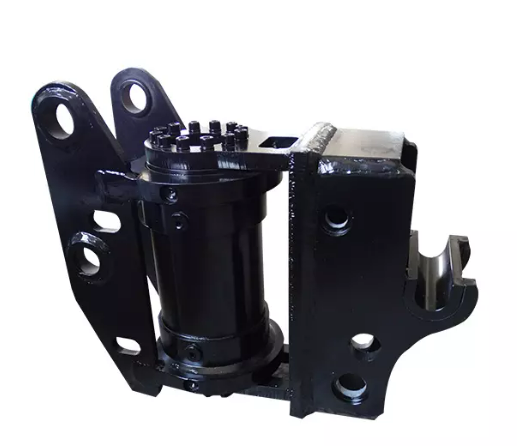
A rotary actuator is a mechanical device that converts various forms of energy (electric, pneumatic, or hydraulic) into rotational motion. What sets a rotary actuator apart from a motor is its ability to provide precise, controlled, limited-angle rotations, typically between 90°, 180°, or 360°. It is designed for tasks that require accurate positioning, such as controlling valves, moving robotic arms, or indexing positions on automated assembly lines.
Rotary actuators often include built-in feedback systems such as limit switches or sensors to ensure the motion stops at predefined angles. These features make them ideal for applications where exact positioning is required, rather than continuous movement.
A motor, on the other hand, is a device designed to provide continuous rotary motion. Motors are used to generate rotational force over an unlimited range of motion. They convert electrical energy (in the case of electric motors) into mechanical motion and are designed for high-speed applications. Examples of motor applications include fans, pumps, electric vehicles, and conveyor belts, where constant rotation or power delivery is needed.
Unlike rotary actuators, motors often require additional components such as encoders, controllers, and gearboxes to achieve precise stops and control over speed and direction. Motors are built to provide ongoing, continuous rotation, making them unsuitable for tasks requiring precise, limited-range movement.
Rotary actuators and motors are designed with different ranges of motion in mind.
Rotary Actuator | Motor |
Provides limited-angle motion (90°, 180°, 360°). | Provides continuous rotation, typically 360°+. |
Ideal for applications requiring precise positioning. | Best for tasks requiring constant speed and power. |
A motor, such as those used in fans or electric vehicles, is designed for continuous 360-degree rotation, where speed and power are prioritized. In contrast, a rotary actuator's limited rotation is tailored for applications where specific angular positions are required, such as rotating a valve or robotic arm by a fixed amount.
Another major difference between rotary actuators and motors is their control mechanisms.
● Rotary actuators are often designed as integrated systems, meaning they come equipped with built-in control elements like sensors, gearboxes, and limit switches. These components allow them to achieve precise stops at specific angles, making them ideal for automation tasks that require accuracy.
● Motors typically require external controllers and feedback systems to achieve similar levels of precision. For example, motors in industrial settings often need additional components such as encoders, controllers, or gearboxes to regulate speed, direction, and stopping points.
Thus, while motors can provide continuous rotation, they often lack the fine control that rotary actuators offer for specific movements.
In robotics, rotary actuators are crucial for providing precise control over angular movements, especially in robotic arms and grippers. They allow the arm to rotate to specific angles, ensuring accurate placement and manipulation of objects. For instance, a rotary actuator could control the angle of a robotic arm, enabling it to pick up and place parts on an assembly line with high precision.
The built-in control and feedback mechanisms of rotary actuators make them ideal for this type of work. The actuator can receive instructions to rotate to specific positions, like a 90-degree angle for placing an object, and stop precisely at that position.
On the other hand, motors in robotics are typically responsible for tasks that require continuous movement. For example, motors are often used in the wheels of mobile robots to provide movement, enabling the robot to travel across the floor. Motors are also used in rotating parts that need to spin continuously, such as in fans, pumps, or conveyors.
While motors provide essential movement, they don't offer the precise control over angular positions that rotary actuators do. Motors are mainly used for driving the robot forward or backward, while rotary actuators manage the more delicate movements that require precise stops.
Rotary actuators typically come with integrated control systems that include feedback elements such as encoders, sensors, or limit switches. These systems ensure the actuator stops at the desired position with high accuracy. Proportional valves or servo valves are often used for controlling the speed and position of rotary actuators.
Rotary actuators are often plug-and-play solutions for automated systems, providing an all-in-one package that simplifies integration. The built-in control mechanisms allow for smoother and more accurate control of positioning and rotational movement, without requiring additional external components.
In contrast, motors generally require additional components to achieve precise control. For instance, motors in industrial applications often need encoders to provide feedback on speed and position. In some cases, gearboxes are necessary to adjust the motor's torque and speed for specific tasks.
Motors are primarily designed to provide continuous motion, and additional control systems are necessary to stop or adjust the speed and direction of the motor. While motors are essential for driving systems that need constant rotation, they lack the built-in feedback and position control features of rotary actuators.
Rotary actuators are best suited for tasks where precise angular movement is required. If your application needs controlled, limited-angle rotation—such as positioning a valve, rotating a robotic arm, or moving an automated gate—a rotary actuator is the optimal choice. They provide accurate control and are built for precise positioning.
For example, if you're building a system to open or close a valve at specific intervals, a rotary actuator will give you the accuracy and reliability needed for these tasks.
Motors are better suited for applications where continuous, high-speed rotation is required. If your task involves driving wheels, conveyors, or rotating parts for an indefinite period, a motor is the right tool for the job. Motors are designed to provide power and speed, making them ideal for applications like fans, pumps, and electric vehicles.
If you need continuous movement or power delivery, a motor will provide the necessary energy to keep the system moving without the need for frequent stops.
In summary, rotary actuators and motors serve distinct functions in various applications. Rotary actuators are designed for precise, limited-angle rotation, ideal for positioning tasks like valve control and robotic movement. Motors, in contrast, provide continuous rotation, focusing on power and speed for applications requiring ongoing movement. Understanding these differences helps in choosing the right component based on your system’s needs.
At Changsha Chiyu Hydraulic Equipment Co., Ltd., we provide high-quality hydraulic systems that integrate seamlessly with rotary actuators. Our products offer reliable performance and precision for automation and industrial tasks, ensuring efficiency and longevity in demanding environments.
A: A rotary actuator provides precise, limited-angle rotation, ideal for tasks like valve control, while a motor offers continuous rotation for tasks needing speed and power, like driving wheels.
A: A rotary actuator converts energy from electric, pneumatic, or hydraulic sources into controlled rotational motion, allowing for accurate positioning and angular movement.
A: Use a motor when continuous rotation is needed, such as for driving machinery or conveyor systems. A rotary actuator is better for precise, limited-angle movement.
A: Rotary actuators offer high precision and control, making them ideal for automated systems that require specific angular positioning, such as robotic arms or valve control systems.


