
- All
- Product Name
- Product Keyword
- Product Model
- Product Summary
- Product Description
- Multi Field Search

Views: 0 Author: Site Editor Publish Time: 2025-12-26 Origin: Site


Have you ever wondered how two types of actuators—linear actuators and rotary actuators—differ in function and application? The difference between these devices can significantly impact the performance of your systems.
In this article, we will explain the core differences between linear actuators and rotary actuators, including how they work, their mechanisms, and the best applications for each. By the end, you’ll know exactly when to choose one over the other for your specific needs.
A linear actuator is a device that creates motion in a straight line, pushing or pulling objects in one direction. Linear actuators convert rotational energy from an electric motor (or other power sources) into linear motion. This type of actuator typically uses mechanisms like ball screws, rack and pinion systems, or belts to achieve the desired movement.
Linear actuators are widely used in systems where precise movement in a straight line is required. For example, in industrial environments, they can control automated doors, gates, or lifting mechanisms. These actuators are also vital for precision tasks such as positioning equipment or materials, making them indispensable in fields like manufacturing, robotics, and material handling. Their design allows for high repeatability and precision, ensuring that objects move to exact positions every time.
Linear actuators can also be powered by various energy sources: electric motors, pneumatic pressure, or hydraulic fluid. Each type of energy source offers different advantages in terms of speed, force, and operational efficiency. Electric linear actuators are especially common in environments that require clean and reliable performance, while hydraulic actuators are used when high force is necessary.
A rotary actuator operates by converting energy into rotational motion. Unlike linear actuators, rotary actuators produce rotational force, or torque, around a central axis. This rotational motion can be continuous or limited to a specific angle, such as 90°, 180°, or 360°.
Rotary actuators are typically used in applications that require turning, twisting, or rotating parts. These actuators are integral in systems such as robotic joints, valve controls, and automated gates, where precise angular movement is needed. The torque produced by rotary actuators is often used to control large, heavy components or facilitate mechanical movements in machinery.
Rotary actuators are often equipped with gears, vanes, or other control mechanisms that manage the direction, speed, and torque of the rotation. The built-in controls make them ideal for tasks where turning or rotating objects needs to be precise and reliable, such as in controlling ball valves, conveyor belts, or robotic arms.
Rotary actuators can be powered by electricity, hydraulics, or pneumatics. The choice of power source often depends on the application’s needs for torque, speed, and energy efficiency. Hydraulic rotary actuators, for example, are widely used in heavy-duty industrial applications, while electric models are typically used in robotics and automation for their precise control.
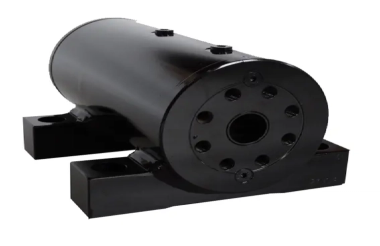
The primary distinction between linear actuators and rotary actuators is the type of motion they generate. While both actuators convert energy into motion, they do so in different ways.
Linear Actuators | Rotary Actuators |
Provide straight-line motion (push/pull). | Provide rotational motion (turning/twisting). |
Ideal for tasks requiring back-and-forth movement. | Used for tasks involving turning or rotating objects. |
A linear actuator moves in a straight line, typically to push or pull objects along a defined path. It is ideal for tasks where exact positioning in a linear direction is required, such as opening a valve, adjusting the position of machinery, or moving materials in warehouses.
A rotary actuator, on the other hand, produces rotational motion. It turns objects around a central point, typically measured in degrees (90°, 180°, 360°). This motion is often needed in applications that require precise turning, like controlling robotic joints or rotating valves.
Linear actuators are measured in distance—inches, millimeters, or other units of length. Their applications are typically focused on tasks that involve moving objects back and forth or along a straight path. This makes them ideal for applications like opening/closing gates, lifting heavy objects, or positioning equipment accurately.
On the other hand, rotary actuators are measured in degrees or for continuous rotation. Their motion is ideal for turning objects or controlling flow. Common applications include controlling ball or butterfly valves, rotating robotic arms, and managing conveyor systems. Rotary actuators are also crucial in industrial automation systems where precise rotational control is required.
Linear actuators typically employ mechanisms like ball screws, racks and pinions, or belts to convert the rotational motion of the motor into linear motion. These mechanisms are efficient at translating rotary motion into the linear displacement needed to perform specific tasks.
Rotary actuators, on the other hand, generate torque directly through internal components like gears or vanes. The torque is used to turn or rotate parts around an axis. Rotary actuators may also include internal gearboxes or mechanisms to control speed and position with high precision.
Linear actuators are used in various applications where movement in a straight line is required. These include:
● Valve control: In industries such as oil and gas, linear actuators control the opening and closing of valves, adjusting the flow rate and pressure precisely.
● Automated doors and gates: Linear actuators allow for smooth and reliable operation of gates, doors, and other automated systems.
● Material handling: In factories and warehouses, linear actuators move materials along assembly lines or conveyor belts, or lift and position heavy loads.
Linear actuators are also used in industries like aerospace, automotive, robotics, and clean energy. They provide the necessary precision and control for a wide range of systems, from positioning tools in CNC machines to controlling the height of a lift system.
Rotary actuators are used in applications requiring rotational motion. Key examples include:
● Valve control: Rotary actuators are often used to control quarter-turn valves, such as ball valves or butterfly valves, in process plants.
● Robotics: Rotary actuators are critical in robotic systems, enabling precise rotation of joints or arms for tasks like assembly or manipulation.
● Conveyor systems: Rotary actuators help control the movement of conveyor belts and sorting systems in automated environments.
Rotary actuators are integral to industrial automation, robotics, and machinery. Their ability to provide high torque and control rotational speed makes them indispensable in manufacturing, packaging, and material handling applications.
Linear actuators are best for applications where straight-line motion is required. If you need to push, pull, lift, or position an object along a fixed path, a linear actuator is the ideal choice. For instance, they are commonly used in automated systems that open and close gates or adjust the height of equipment.
If your application involves precision positioning or controlled movement in one direction, such as positioning materials on an assembly line or lifting heavy items, a linear actuator is the best fit.
Rotary actuators are more suitable for tasks requiring rotational movement, such as turning valves, rotating robotic arms, or controlling the movement of machinery. If your system needs precise rotational movement, whether it’s continuous or a limited angle (like 90°, 180°, or 360°), a rotary actuator is the right choice.
For example, rotary actuators are ideal for controlling valves in process industries, rotating robotic joints in assembly tasks, or moving parts in conveyor systems.
Linear actuators offer high repeatability and precision in tasks requiring exact linear movement. They are ideal for operations where accuracy is crucial, and they typically have low maintenance requirements. Their efficiency and reliability make them ideal for use in harsh environments where high durability is necessary.
Rotary actuators excel in providing constant torque over a wide range of rotational angles. They are efficient for tasks that require consistent rotation, such as valve control or robotic movements. Rotary actuators can handle higher loads and are often more versatile in applications that require rotational movement in both industrial and commercial environments.
In conclusion, linear actuators and rotary actuators offer distinct movement capabilities. Linear actuators are ideal for tasks requiring straight-line motion, such as lifting, positioning, and moving loads. On the other hand, rotary actuators excel in applications where rotational movement is required, such as turning valves or rotating robotic arms.
At Changsha Chiyu Hydraulic Equipment Co., Ltd., we provide high-quality hydraulic actuators that deliver excellent performance for both linear and rotary motion applications. Our products are designed for precision, reliability, and efficiency, ensuring optimal results in a wide range of industries.
A: A linear actuator moves in a straight line to push or pull objects, while a rotary actuator produces rotational motion to turn or twist objects.
A: A linear actuator converts rotary motion into straight-line motion using mechanisms like ball screws, racks, or belts, enabling precise positioning tasks.
A: Use a rotary actuator when you need precise rotational movement, such as turning valves or rotating robotic joints, and a linear actuator for straight-line motion.
A: Linear actuators are used for tasks like opening/closing gates, lifting loads, or precise positioning in industries like manufacturing, robotics, and material handling.


