
- All
- Product Name
- Product Keyword
- Product Model
- Product Summary
- Product Description
- Multi Field Search

Views: 0 Author: Site Editor Publish Time: 2025-12-28 Origin: Site


Rotary actuators convert energy into rotational motion. Unlike linear actuators, they rotate around an axis.In this article, you'll learn about rotary actuator motion types. This helps you select the right one for your needs.At CHIU, we provide high-quality, reliable actuators. Learn more about our products today!
A rotary actuator is a device that converts energy—whether electrical, hydraulic, or pneumatic—into rotational motion. Unlike linear actuators, which move objects along a straight path, rotary actuators move objects around a central point or axis. The motion can range from small-angle rotations, such as 45° to 360°, to continuous, infinite rotations. These actuators are essential in industries that require controlled angular movement, including robotics, manufacturing, and automotive systems.
Rotary actuators are typically composed of a motor that drives mechanisms like gears, cams, or shafts to generate rotational movement. The torque output and motion range can vary depending on the actuator's design and intended application. Some rotary actuators are designed for high torque, while others offer more precise control with a limited range of motion. These actuators provide versatility, making them suitable for both high-power and precision-dependent tasks.
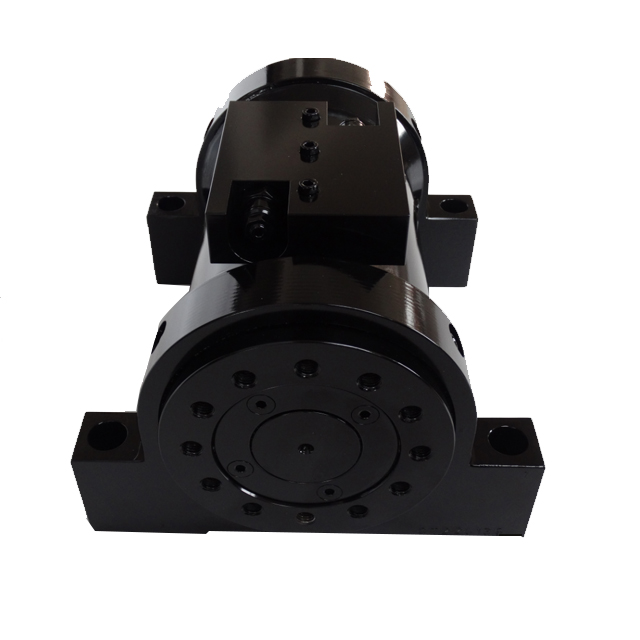
Limited-angle rotation refers to rotary motion that occurs within a specific range, typically between 45° and 360°. This type of motion is ideal for applications where only a certain angle of rotation is needed, such as opening a valve or adjusting the position of a robotic arm. For instance, rotary actuators used in valve control typically rotate within a set range to accurately control fluid flow, offering high precision and reliable performance.
Some rotary actuators are designed to rotate continuously in one direction. These actuators are used in applications that require uninterrupted motion, such as conveyor belts, electric motors, or rotating machinery. Continuous rotation actuators offer a constant, ongoing rotational movement without a fixed endpoint. This makes them particularly suitable for operations that demand continuous motion, such as in material handling or automated systems.
Different industries and applications require varying types of rotary motion, and actuators are designed accordingly. For example, high-precision sectors like aerospace or medical equipment may need actuators that provide controlled, limited-angle rotations, ensuring fine movement control. On the other hand, heavy-duty applications, such as material handling in manufacturing, may require actuators capable of continuous rotational movement to keep systems running smoothly.
Motion Type | Limited-Angle Rotation | Continuous Rotation |
Rotation Range | Typically 45° to 360° | Continuous, no stopping point |
Common Applications | Valves, robotic arms, doors | Conveyor belts, motors |
Torque Output | Varies based on model | Typically high and consistent |
Control Precision | High precision | Continuous movement with fewer precision requirements |
Example Uses | Robotic arms, door actuators | Conveyor systems, electric motors |
Rotary actuators convert electrical, hydraulic, or pneumatic energy into rotational motion. In hydraulic actuators, pressurized fluid moves a piston that turns a shaft, generating rotational force. Electric rotary actuators use electric motors to create rotational force, translating electrical energy into motion using gears and shafts. This energy conversion process enables precise and controlled rotational movements, essential for various industrial applications.
Rotary actuators generally consist of a motor, gears, shafts, and sometimes hydraulic or pneumatic cylinders, depending on the energy source. The motor generates motion, the gears modify the speed and torque, and the shaft transmits the rotational force to the connected mechanism. By adjusting these components, the actuator can be customized for specific applications, offering either high precision or high torque, depending on the requirements.
Modern rotary actuators are equipped with control systems that regulate speed, position, and torque. These systems include feedback mechanisms such as encoders, which help ensure accuracy and repeatability. Control systems adjust the motor’s input signals to achieve the desired rotational motion with high precision, making these actuators ideal for industries like robotics, automation, and medical devices.
Hydraulic rotary actuators rely on pressurized fluid to create rotational motion. These actuators are typically robust, capable of handling high torque and heavy loads, making them ideal for applications like construction machinery, industrial presses, and large mechanical systems. They can provide powerful, precise rotational movement in environments where significant force is required.
Pneumatic rotary actuators, on the other hand, use compressed air to generate motion. These actuators are often lighter and faster, making them suitable for applications requiring rapid motion and lower torque. Pneumatic actuators are commonly used in material handling systems, packaging machines, and other light-duty applications where speed is more critical than high force.
Feature | Hydraulic Rotary Actuators | Pneumatic Rotary Actuators |
Power Source | Hydraulic fluid (oil) | Compressed air |
Torque Output | High torque, ideal for heavy loads | Lower torque, faster movements |
Speed | Slower, high force | Faster, lighter loads |
Applications | Construction, presses | Material handling, packaging |
Maintenance | High, fluid maintenance required | Low, air pressure checks |
Electric rotary actuators convert electrical energy into rotational motion using electric motors. These actuators offer high precision, making them ideal for applications that require fine control and repeatable movements. They are often used in robotics, medical devices, and automation systems, where accuracy and reliability are essential.
Electric rotary actuators are commonly found in industries that require precise, repeatable motion. These actuators are well-suited for applications in robotics, medical equipment, and automated systems, where high precision is essential. Their low-maintenance design makes them an excellent choice for long-term, reliable performance in high-demand environments.
Feature | Electric Rotary Actuators | Hydraulic Rotary Actuators | Pneumatic Rotary Actuators |
Control Precision | High precision | Less precise in fine adjustments | Good precision for lighter loads |
Torque Output | Moderate to high torque | High torque, ideal for heavy-duty tasks | Moderate torque, fast movements |
Efficiency | High energy efficiency | Moderate efficiency, high maintenance | Moderate efficiency, low maintenance |
Applications | Robotics, medical devices, automation | Construction, industrial presses | Light machinery, packaging |
Maintenance | Low, minimal upkeep | High, requires hydraulic fluid monitoring | Low, minimal upkeep |
Rotary actuators are integral to industrial automation, providing accurate motion control in robotic arms and various automated systems. In manufacturing, they are used to position parts, rotate objects, and move components with high precision. These actuators enable tasks such as material handling, assembly, and packaging with minimal human intervention, enhancing productivity and consistency in operations.
Rotary actuators also play a crucial role in everyday products, such as power windows, adjustable chairs, and HVAC systems. These applications rely on the actuator's ability to provide reliable rotational movement for functions like adjusting seating positions, opening or closing windows, and controlling airflows. Their compact design and efficiency make them ideal for devices that need precise control within limited spaces.
In more specialized fields like aerospace, defense, and medical technology, rotary actuators are essential for applications where high precision is vital. For example, in medical devices such as surgical robots and diagnostic equipment, these actuators ensure smooth, controlled rotations for delicate operations. They are also used in aerospace for applications like radar positioning and satellite control, where reliability and accuracy are critical for success.
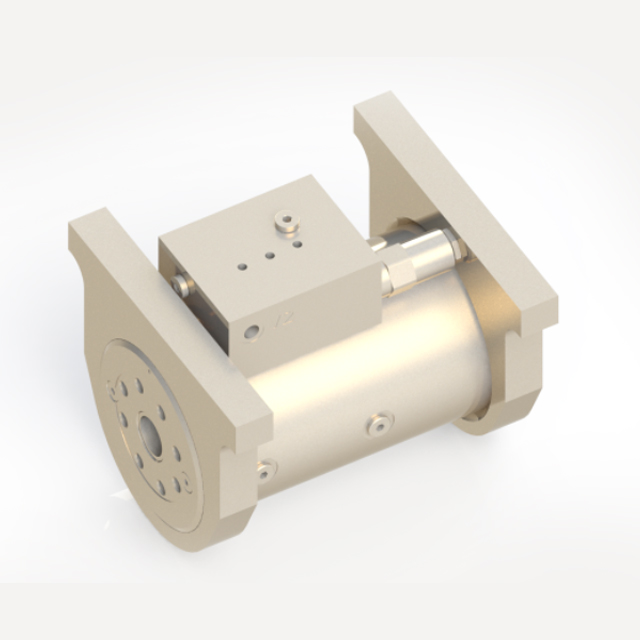
Rotary actuators are designed to generate high torque in compact packages, making them ideal for applications where space is limited but substantial force is required. This characteristic makes rotary actuators highly suitable for heavy-duty tasks, such as large machinery or industrial equipment. Hydraulic models, in particular, are capable of delivering significant torque, providing the necessary power for demanding applications.
One of the key advantages of rotary actuators is their ability to provide excellent control over rotational movement. This makes them perfect for applications requiring fine adjustments. In robotics and automation, for example, high precision is essential for achieving accurate positioning and smooth, repeatable movements. The precision offered by rotary actuators ensures that complex tasks can be carried out with minimal error, increasing efficiency and reliability.
Despite their powerful performance, rotary actuators are often compact in design, allowing them to fit into tight spaces without sacrificing efficiency. Their small size does not compromise their ability to generate significant torque, making them ideal for applications with limited space, such as in robotics, automotive systems, or aerospace. Additionally, rotary actuators offer design flexibility, allowing them to be adapted to a wide range of industries and specific use cases.
When selecting a rotary actuator, it is crucial to consider the type of motion required—limited-angle rotation or continuous rotation. Limited-angle actuators are ideal for applications like valve control, where precise angular movement is necessary. Continuous rotation actuators, on the other hand, are better suited for systems that need uninterrupted movement, such as conveyor belts or rotating machinery. Choosing the right motion type ensures optimal performance and efficiency.
Several factors should be taken into account when selecting a rotary actuator, such as torque, load capacity, speed, and the environmental conditions in which the actuator will be used. These factors will help you determine the most suitable actuator for your application. It is essential to align the actuator’s specifications with the needs of your specific task to ensure long-term reliability, efficiency, and performance.
Rotary actuators are crucial in many industries, providing precise rotational motion. They power everything from robotic arms to valves and heavy machinery. Understanding the different motion types, from limited-angle to continuous rotation, is essential. With hydraulic, pneumatic, and electric models available, rotary actuators can be customized to suit any application. At CHIU, our actuators are designed to offer high performance, reliability, and precision to meet your needs.
A: A rotary actuator provides rotational motion, typically ranging from limited-angle rotation (45° to 360°) to continuous rotation, depending on the application.
A: Rotary actuators convert energy—electric, hydraulic, or pneumatic—into rotational motion, driving gears or shafts to achieve precise movement in various applications.
A: Rotary actuators are used in robotics, manufacturing, automotive systems, and more, providing controlled motion for tasks such as positioning and rotating parts.
A: Rotary actuators are ideal when rotational motion is needed, offering high torque and precision in tasks that require angular displacement, unlike linear actuators.


